Adventure Destinations That Actually Work with Toddlers
We were sitting in our lounge room one evening, scrolling through photos from our pre-baby years. Rock climbing in the Grampians. Kayaking at dawn. Camping trips where we'd pack light and hike for hours. My partner looked at me and said, "We're not those people anymore, are we?"
I refused to accept that.
Have you felt that pressure? The unspoken expectation that once you have a toddler, your weekends shrink to playgrounds, shopping centres, and maybe a café if you're feeling ambitious. We decided that wasn't going to be us. Not because we're reckless or trying to prove anything, but because we genuinely believe our daughter deserves to see more than rubber matting and plastic slides.
What followed was eight months of testing what actually works. Some trips were brilliant. Others taught us exactly where the line is. Here's what we learned taking our 18-month-old to places most people wouldn't consider.
Why We Refused to Put Adventure on Hold
That conversation in the lounge room wasn't really about us. It was about what we wanted our daughter to experience while she's still forming her understanding of the world. We didn't want her first memories to be of being told "no" or "it's too dangerous" or "maybe when you're older."
So we made a decision. We'd keep adventuring, but we'd do it smarter. We'd research properly, pack obsessively, and accept that some trips would need to be cut short. We'd also accept that other parents might think we're mad, and that's fine. This isn't about judging anyone who chooses differently. It's about refusing to let fear make all our decisions.
If you're reading this and thinking about the trip you've been putting off, ask yourself: what's actually stopping you? Because once we started planning properly, most of our fears turned out to be manageable.
The Waterfall Hike That Changed Our Minds About 'Too Young'

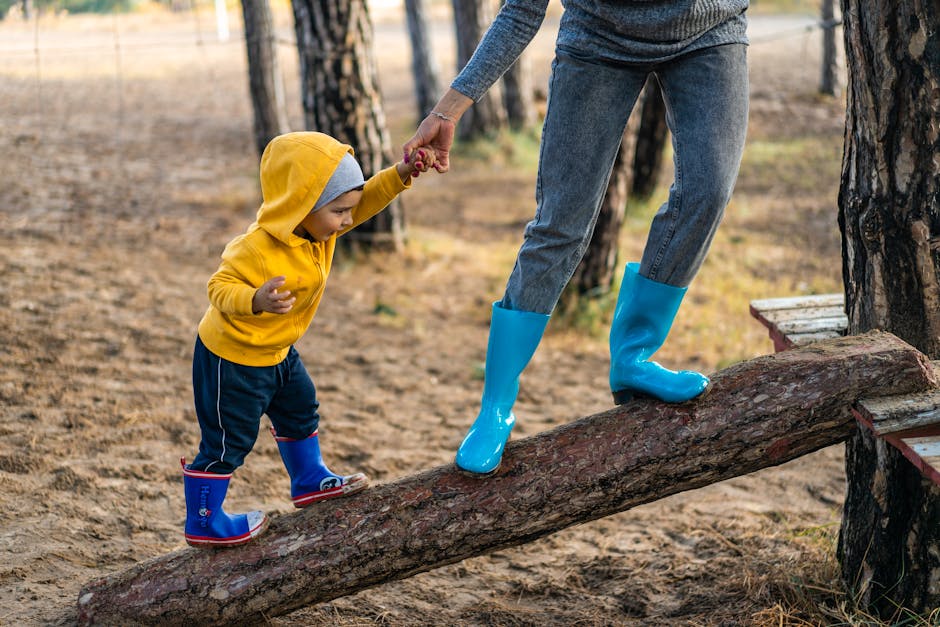
Erskine Falls in the Otways. The trail is 250 metres each way with a 60-metre descent. Doesn't sound like much until you're carrying an 11-kilogram toddler who's decided she wants to walk, then be carried, then walk again.
We were nervous. The path is steep in sections, with exposed tree roots and uneven stone steps. We'd read that children's risk of injury outdoors can double due to their natural curiosity, and we weren't about to test that theory on a slippery trail.
The trip took us 45 minutes down and nearly an hour back up. About halfway down, she had a meltdown because she wanted to touch every leaf and we were trying to keep moving. We stopped. Let her explore for ten minutes. She calmed down, and we continued.
When we reached the bottom and she saw the waterfall, everything clicked. She stood there, completely still, watching the water crash down. Then she started laughing. Not her usual giggle, but this deep, surprised laugh like she couldn't believe what she was seeing.
What we packed beyond the nappy bag
We brought a proper first-aid kit with sterile gauze, antiseptic wipes, and adhesive bandages. Used the antiseptic wipes twice when she scraped her hand on a rock.
A lightweight baby carrier with chest and waist straps. She walked maybe 20% of the trail. The rest of the time, she was on my back.
SPF 50+ sunscreen and a wide-brimmed hat. The canopy was thick, but there were patches of direct sun. We reapplied twice.
Emergency contact card tucked into the first-aid kit. Mobile reception was patchy. If something went wrong, we wanted anyone who found us to know who to call.
Two full water bottles and a collapsible cup. She drank more than we expected. The humidity was higher under the canopy, and she was working hard.
Snacks in sealed containers. Dried mango and rice crackers. She ate half of it on the way back up when her energy dropped.
The moment she reached for the water spray
We were standing about five metres from the base of the falls. The spray was hitting us lightly, just enough to feel cool. She reached out her hand, palm open, like she was trying to catch it.
Then she looked at me, looked back at the water, and reached out again. She didn't understand what she was seeing, but she knew it was something worth paying attention to.
That moment confirmed it. She might not remember this trip, but she's learning that the world is bigger than our backyard. That's worth the effort.
Sunrise Hot Air Balloon Ride (Yes, Really)

Yarra Valley. We booked with Global Ballooning, who confirmed they allow children as young as six months if they can sit unassisted. The basket has padded edges and multiple compartments, so you're not all crammed into one space.
This sounds insane. We know. But the operator walked us through their safety protocols, and we felt confident enough to proceed. The basket is stable, the flight is smooth, and the pilot has full control over altitude and landing.
Still, we spent the week leading up to it second-guessing ourselves.
How we handled the early wake-up
We had to be at the launch site by 5:15am. That meant waking her at 4:30am. In the dark. While she was in deep sleep.
We adjusted her bedtime by 30 minutes earlier for three nights before the flight. It helped, but not as much as we'd hoped. On the morning, we dressed her while she was still half-asleep, then put her straight into the car seat with a bottle of warm milk.
She fell back asleep in the car. We woke her again when we arrived, and she was confused and grumpy for about ten minutes. Then the balloon started inflating, and she forgot to be upset.
Her reaction to being above the clouds
The moment we lifted off, she went quiet. Not scared, just focused. She watched the ground drop away, then looked up at the balloon, then back down again.
Once we were above the low cloud layer, she started pointing. At the other balloons. At the vineyards below. At a flock of birds that flew past us.
She wasn't fussy, but she wasn't thrilled either. She was processing. Taking it in. About 20 minutes into the flight, she got bored and wanted a snack. We gave her rice crackers, and she sat on the floor of the basket eating them while we floated over the valley.
It wasn't the magical moment we'd imagined, but it was real. And that's better.
The Beach Cave Exploration at Low Tide

Caves Beach on the Central Coast. The cave system is accessible at low tide, with smooth sand floors and wide openings. We checked the tide charts obsessively for a week before going.
We used the Willy Weather app to track the exact low tide time, which was 7:42am. We aimed to be there by 7:00am to give ourselves a full hour before the tide started turning. We also checked the swell forecast. Anything above 1.5 metres and we would have cancelled.
Before letting her explore, we walked through the caves ourselves. Experts recommend performing a quick check for sharp objects, broken equipment, or slippery spots before letting children play outside. We found two sections with sharp rock edges and avoided them entirely.
Timing it right with tide charts
Tide charts show the height of the water at different times throughout the day. Low tide is when the water is at its lowest point, exposing areas that are usually underwater. High tide is the opposite.
We used the Willy Weather app because it shows tide times specific to each beach. Some beaches have a two-hour window at low tide. Others have less than 30 minutes. Caves Beach gave us about 90 minutes, which felt safe.
We gave ourselves a 30-minute buffer before the tide turned. That meant being back at the car by 8:30am, even though the tide wouldn't start rising significantly until 9:00am. We didn't want to cut it close.
Why we brought a headlamp for a daytime trip
Even at 7:30am with full sun outside, the back sections of the caves were nearly black. The openings don't let much light through, and once you're ten metres in, you can't see the ground clearly.
The headlamp let us spot puddles, uneven surfaces, and one section where the sand dropped off suddenly into a deeper pool. Without it, we would have missed that and probably ended up with a wet, upset toddler.
She wasn't scared of the dark, but she didn't like it either. We kept the headlamp pointed at the ground in front of us, not at her face, and she stayed calm.
Wildlife Sanctuary After-Hours Tour

Moonlit Sanctuary in Pearcedale. The after-hours tour runs from 6:00pm to 8:00pm, which aligned perfectly with her usual routine. She'd had her nap, eaten dinner, and was in her most alert window of the day.
The tour is capped at 20 people, and children under two are free. The guide explained that evening is when the animals are most active, and the smaller group size means less noise and chaos.
This felt like a good middle ground. Controlled environment, professional supervision, but still close enough to wildlife to feel like an adventure.
The kangaroo that hopped right past her
We were standing near the kangaroo enclosure when one of the larger males hopped past us, maybe a metre away. She froze. Didn't move, didn't make a sound. Just watched.
The guide stepped in immediately, positioning herself between us and the kangaroo without making it obvious. She explained later that the males can be unpredictable, especially in the evening when they're more active.
Once the kangaroo moved on, our daughter looked at me and said "big." That was it. Just "big." But she said it with this tone of awe that made the whole trip worth it.
Why sunset timing worked better than midday
The temperature at 6:00pm was 22 degrees, compared to 32 degrees at midday. That meant less sun exposure, less need for constant reapplication of sunscreen, and a much more comfortable toddler.
The timing also aligned with her energy levels. By midday, she's usually ready for a nap. By 6:00pm, she's had her rest and is alert enough to engage with what's happening around her.
The animals were noticeably more active. The kangaroos were hopping around, the koalas were awake, and the nocturnal animals were just starting to emerge. At midday, half of them would have been sleeping.
What These Eight Places Taught Us About Parenting
We learned that preparation matters more than confidence. You can feel ready all you want, but if you haven't packed the right gear or checked the conditions, you're setting yourself up for problems.
We learned that safety strategies can prevent injuries and build children's confidence in different environments. Every trip we took required a risk assessment. Not a formal one, but a real conversation about what could go wrong and how we'd handle it.
We learned that our daughter is more capable than we gave her credit for. She handled steep trails, early mornings, and unfamiliar environments better than we expected. Not perfectly, but well enough.
And we learned that adventure doesn't have to stop when you have a toddler. It just has to change shape.
What adventures have you been putting off? What's the trip you keep talking about but haven't booked? Start small. Pick one thing that feels just outside your comfort zone and plan it properly. You might surprise yourself.
If you're looking for destinations that actually work with toddlers, check out our Destinations guide or use our Compare tool to find places that match your family's needs. And if you need help planning your next adventure, Toddler Vacay specialises in making family travel achievable, not theoretical.