What Actually Works on Airplanes with Toddlers (According to 200 Flights)
You're at 35,000 feet. Your 22-month-old has just thrown a sippy cup at the passenger in 14B, rejected every snack you packed, and is now screaming because you won't let them sprint down the aisle. The Pinterest board you saved titled "Peaceful Travel with Toddlers" feels like a cruel joke.
Here's what 200 flights with small children have taught me: perfect flights don't exist. The goal isn't a silent, angelic child who colours quietly for three hours. The goal is manageable chaos. The gap between what parenting blogs recommend and what actually works at cruising altitude is enormous, and most advice ignores the reality that you're managing a tiny human in a metal tube with no escape route.
This isn't about eliminating meltdowns. It's about having fewer of them, and knowing what to do when they happen anyway.
The Stuff Everyone Recommends That Actually Fails at 30,000 Feet
Let's start with what doesn't work, because you've probably already bought half of it.
Elaborate activity books sound brilliant until you're 40 minutes into a flight and your toddler has peeled exactly three stickers, lost interest, and is now trying to eat the backing paper. Sticker books lose their appeal in about five minutes. The intricate ones with themes and matching games? Forget it. Your toddler doesn't care about sorting farm animals by habitat.
Saving new toys specifically for the flight is another strategy that fails consistently. The theory makes sense: novelty equals engagement. The reality: you hand over the carefully wrapped surprise toy, they examine it for 90 seconds, then ask for your phone. The confined space kills the excitement. At home, a new toy means running around with it, showing it to the dog, incorporating it into existing play. On a plane, it's just another object in a very small space.
Relying solely on tablets creates a different problem. Screen time works, but only for so long before overstimulation kicks in. Then you've got a wired, cranky toddler with no backup plan. The advice to "save screen time for emergencies" sounds responsible, but toddlers need active engagement, not passive watching, to burn mental energy.
None of these strategies are completely useless. Some kids will happily stick stickers for an hour. But the common failure point is the same: they assume toddlers will engage the same way they do at home. They won't. The environment changes everything.
What these failures taught me is that engagement needs to be sensory, short, and constantly rotating. Which brings us to what actually works.
Snack Packs Beat Screen Time (But Not How You Think)

Snacks aren't just food. They're entertainment. A toddler eating is a toddler who's occupied, using their hands, engaging their senses, and taking time to process what they're doing. It's active, not passive. A small box of raisins can buy you 10 minutes of peace, not because your child is hungry, but because opening it, picking them out one by one, and eating them is a complete activity.
This contradicts the standard advice about limiting snacks and saving screen time for meltdowns. But screen time is passive. Eating is active. You want active engagement because it tires them out mentally.
The 15-minute rotation rule
Switch activities every 15 minutes, before your toddler loses interest. Not after they're bored and whining. Before.
Here's a sample rotation: small pack of crackers, then colouring with three crayons, then a walk to the bathroom (even if they don't need it), then a different snack, then a simple toy like a small car. You control the timing. Set a timer on your phone if you need to. When 15 minutes is up, you initiate the switch.
This prevents the boredom spiral. Toddlers don't self-regulate engagement. If you wait until they're melting down, you've already lost. The rotation keeps them moving between activities before frustration builds.
Why novelty matters more than quantity
Five new items beat 20 familiar toys every single time. It doesn't matter if the new items are cheap. Novelty is the key factor, not quality or cost.
Go to a discount store before your flight. Buy individually wrapped snacks your toddler hasn't seen before. Grab a few small toys that cost $2 each. The fact that they're new is what matters. You can toss them after the flight or give them away. Don't invest in expensive travel toys or spend hours preparing elaborate activity kits.
One parent I know buys a new pack of crayons for every flight, even though they have 50 crayons at home. New crayons in an unopened box are exciting. Old crayons in a ziplock bag are not. It's that simple.
The One Seat Configuration That Changes Everything
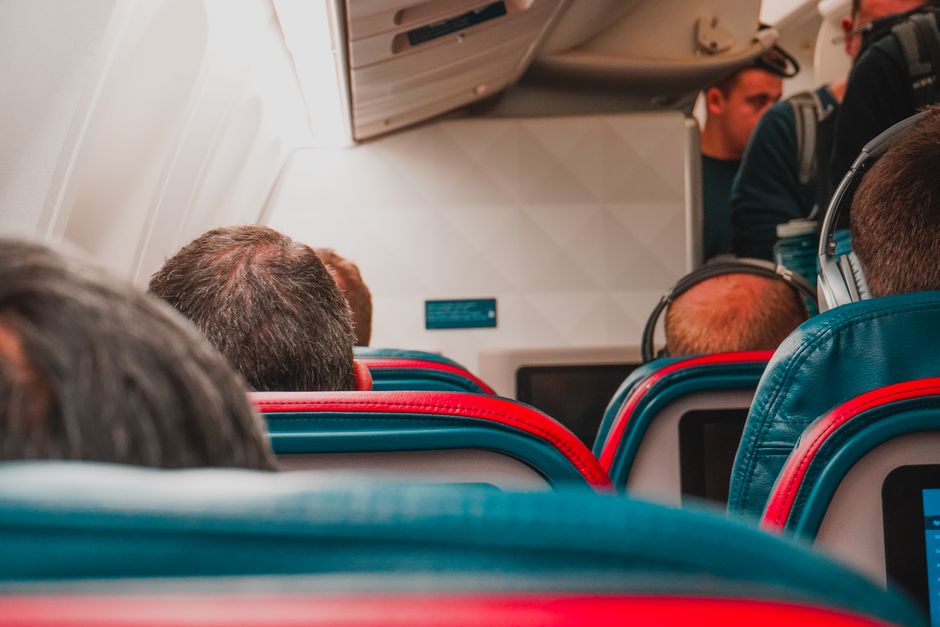
Seat selection happens during booking, but it affects every other strategy you'll use. There's no universal best seat. It depends entirely on your child's age and temperament. What works for a 10-month-old who needs floor space is wrong for a 2.5-year-old who needs to move.
Bulkhead vs aisle: the real trade-offs
Bulkhead seats give you floor space. Your toddler can sit on the floor with toys spread out, and there's no seat in front of them to kick. If you have a younger toddler who still plays on the floor, this is gold. Some bulkhead rows also have bassinet attachment points, though most toddlers are too big for those by 12 months.
The downsides: you lose under-seat storage during takeoff and landing, which means everything goes in the overhead bin when you need it most. The armrests often don't lift, so you can't create a makeshift bed across seats. And bulkhead rows are frequently near galleys or bathrooms, which means noise and foot traffic.
Aisle seats give you freedom. Easy bathroom access, ability to stand up without climbing over people, and quick escape for pacing when your toddler refuses to sit still. You can walk them up and down the aisle without disturbing anyone.
The downsides: your toddler can escape into the aisle, they'll get bumped by service carts and other passengers, and there are more distractions. Every person walking past is something new to look at, which sounds good until your toddler is craning their neck and grabbing at strangers.
Recommendation: bulkhead for under-2s who need floor play space. Aisle for 2+ who need movement and won't sit still anyway.
Why lap infants are harder than paid seats after 18 months
Lap infants save money. But after about 18 months, you're holding a 12kg+ child on your lap for hours with no personal space and no containment strategy. They're too big to comfortably hold, too active to stay still, and too strong to restrain without a fight.
A car seat in a paid seat solves this. It provides containment, a familiar sleep environment, and a defined boundary. Your toddler knows what a car seat means. They're used to sitting in it. It's not a fight.
Yes, it's expensive. A seat for an 18-month-old on a Sydney to Perth flight can cost $300-$400. But the alternative is three hours of wrestling a toddler on your lap while they kick the seat in front, grab your drink, and headbutt your chin. The safety argument matters too, but the practical reality is what makes the difference.
I'm not shaming parents who choose lap infant. The cost is real. But understand the trade-off: you're saving money in exchange for significantly harder physical management of your child.
The Boring Logistics That Prevent Meltdowns
These strategies aren't exciting. They won't make a good Instagram post. But they prevent problems before they start, which is worth more than any clever hack.
Nappy changes before boarding (even if they don't need one)
Change your toddler's nappy at the gate 10 minutes before boarding. Even if they don't need it. Even if they just had one.
Airplane toilets make nappy changes exponentially harder. The change tables are tiny, often broken, and positioned at awkward angles. Turbulence mid-change is a nightmare. And if there's a queue, you're stuck in the aisle holding a toddler who needs changing while three people wait behind you.
A fresh nappy at the gate buys you at least 90 minutes of not dealing with the airplane toilet. Do a full outfit check at the same time. Make sure nothing's riding up, no tags are irritating them, shoes are comfortable. Fix everything on the ground.
The hands-free carry system that actually works
You need your hands free. For boarding passes, passports, grabbing snacks, and catching your toddler when they bolt.
The configuration that works: toddler in a carrier or walking independently, nappy bag as a backpack, wheeled carry-on. That's it. No shoulder bags that slip off. No carrying your toddler plus two bags. No overstuffed carry-ons that don't fit overhead.
Wear the toddler carrier even if your child is walking. When they refuse to walk halfway through the terminal (and they will), you can pop them in the carrier without stopping. Shoulder bags are useless. They slip, they swing, they get in the way. Backpacks stay put.
Boarding last vs boarding first: when each makes sense
Most Australian carriers offer family pre-boarding. You don't have to take it.
Board first if you have a car seat to install, lots of gear to stow, or a toddler who needs time to settle before the crowd arrives. The extra 10 minutes to get organised without people pushing past you is valuable.
Board last if you have an active toddler who can't sit still. Why add 20 minutes of confined time before the plane even moves? Let them burn energy at the gate while everyone else boards. Walk on when the final boarding call happens. You'll spend less total time managing them in a confined space.
For toddlers 18 months and older who don't need car seat installation, boarding last almost always makes more sense. The gate area has space to move. The plane doesn't.
What to Do When It All Falls Apart Anyway
Even with perfect preparation, some flights will be disasters. Your toddler will scream. Other passengers will glare. You'll feel like the worst parent on the plane.
Here's what to do: walk the aisle. Repeatedly. It doesn't matter if you've already walked it five times. Walk it again. Movement resets toddlers. Take them to the bathroom even if they don't need it. The change of scenery helps. Hand over snacks with no guilt about sugar or timing. Give them screen time without worrying about limits. This is survival, not optimal parenting.
Other passengers' reactions are not your responsibility. You're managing your child. That's the job. Most passengers are more sympathetic than you think, and flight attendants have genuinely seen worse. I've had cabin crew bring colouring pages, offer to hold my son while I used the bathroom, and reassure me that the crying wasn't as loud as I thought.
The goal is manageable chaos. Not perfection. Not a silent child. Just getting through the flight without anyone getting hurt and your toddler arriving in roughly the same state they started.
Each flight gets slightly easier because you learn what works for your specific child. The rotation timing that works. The snacks that buy the most time. The point in the flight when they'll actually nap. You can't learn this from a blog post. You learn it by doing it.
If you're planning a family trip and want expert guidance on making travel with toddlers more manageable, Toddler Vacay specialises in helping families navigate these challenges. They understand that flying with small children isn't about perfection - it's about preparation, realistic expectations, and knowing what actually works at 30,000 feet.