Red Flags in 'Family-Friendly' Resort Deals
You've seen the ads. Smiling families. Perfect pools. "Kids stay free!" plastered across every banner. Then you arrive and realise the pool is packed, the "free" meals cost you $80 in room markups, and the kids' club closes at 3pm.
Family travel is already expensive enough without resorts gaming the system. The problem isn't that these places are bad. It's that "family-friendly" has become shorthand for inflated prices wrapped in vague promises. When 87% of parents say their children influence purchase decisions, resorts know exactly which buttons to push.
Here's what to watch for before you book. These aren't minor inconveniences. They're deal-breakers that turn a holiday into an expensive lesson in fine print.
Why 'Family-Friendly' Has Become Marketing Code for 'Overpriced'
The term "family-friendly" used to mean something practical. High chairs. Shallow pools. Staff who don't glare when your toddler drops a plate.
Now it means premium pricing with minimal additional value. Resorts slap the label on anything with a cot available and charge 40% more than comparable properties down the road. The logic is simple: parents will pay extra for perceived safety and convenience. Most of the time, you're paying for marketing, not facilities.
Check what you're actually getting. Compare the family package to booking the same room without the label. Often the only difference is a welcome pack of cheap toys and a $200 markup. If the homepage doesn't list specific amenities beyond "great for families," assume there aren't any.
Red Flag #1: 'Kids Eat Free' That Costs You More Everywhere Else
This is the oldest trick in the book. Kids eat free sounds generous until you realise the room rate jumped $150 per night compared to the non-package option.
Do the maths before you book. Take the total package cost and divide it by the number of nights. Then compare it to the standard room rate plus what you'd actually spend feeding your kids. Most families would save money buying meals separately, especially if your children are young and don't eat much anyway.
The hidden markup on room rates when kids' meals are 'included'
Resorts bundle kids' meals into packages and inflate the base rate to compensate. You're not getting free food. You're prepaying for it at a premium.
Look at the nightly rate difference between the family package and the standard room. If it's more than $50–$70 per night and you've got one or two young kids, you're overpaying. A toddler eating pancakes and nuggets doesn't justify a $150 markup.
Ask for an itemised breakdown. Most resorts won't provide one, which tells you everything you need to know.
Why restaurants with kids-eat-free deals often have the worst adult menu prices
The kids eat free, but the adult pasta costs $38. The steak is $65. Drinks aren't included, and a glass of wine is $18.
These restaurants recoup the "free" kids' meals by gouging parents. You end up spending more on two adult dinners than you would've spent on a family meal at a normal restaurant. Check the adult menu prices before you commit. If they're 30–50% higher than comparable restaurants nearby, walk away.
Red Flag #2: 'Supervised Kids' Club' With More Restrictions Than Actual Supervision

The kids' club looks amazing in the photos. Bright colours. Smiling staff. Activities listed for every age group.
Then you read the fine print. It's only open 10am–2pm. Your four-year-old is too young. Your eight-year-old is too old. And it costs $45 per child per session despite being advertised as "complimentary."
Age restrictions that exclude your actual children
Many kids' clubs only accept children aged 5–10. If you've got a three-year-old and an eleven-year-old, neither qualifies. You've just paid extra for a facility you can't use.
Check the age brackets before you book. If your kids fall outside the range, the kids' club is irrelevant. Don't let the resort convince you otherwise. Some properties on Destinations pages clearly list age ranges upfront, which saves you the hassle of finding out on arrival.
Limited hours that don't match when you'd actually want child care
Kids' clubs that close at 2pm are useless. You don't need childcare during the day when you're all at the pool together. You need it in the evening so you can have dinner without a meltdown.
Look for clubs that offer evening sessions or at least run until 5–6pm. If the hours are 10am–2pm, it's a token service designed to tick a box, not provide actual value.
Red Flag #3: 'All-Inclusive' That Excludes Everything Your Kids Want
All-inclusive should mean all-inclusive. It doesn't.
The waterslides cost extra. The ice cream stand isn't included. The kids' activity sessions are $30 each. By day three, you've spent $400 on top of the package price.
Activities that cost extra despite the 'all-inclusive' label
Read the inclusions list carefully. Most all-inclusive resorts exclude premium activities like waterparks, arcade games, motorised water sports, and excursions. These are exactly the things kids want to do.
Ask for a full list of what's included and what costs extra. If the included activities are limited to pool access and basic kids' club sessions, you're not getting much value. Compare the package cost to what you'd pay booking a standard room and paying for activities as you go.
Food options so limited your kids won't eat them anyway
All-inclusive buffets often have limited kid-friendly options. If your child only eats plain pasta and chicken nuggets, and the buffet serves neither, you'll end up ordering from the à la carte menu at extra cost.
Check sample menus before you book. If the resort won't provide them, that's a red flag. Most genuinely family-friendly properties will happily share what's on offer because they know it's a deciding factor for parents.
Red Flag #4: Stock Photos Showing Families That Don't Match the Reality
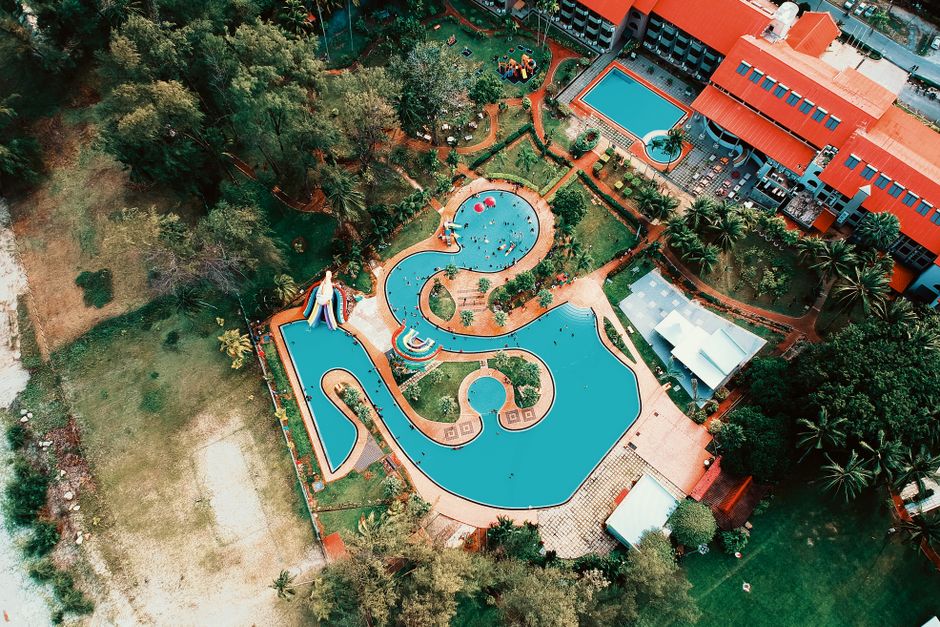
Marketing photos show empty pools, spacious rooms, and families laughing in perfect lighting. Reality is different.
The pool is packed. The room is cramped. The beach is 400 metres away, not "steps from your door."
Empty pools and beaches in marketing vs. overcrowded reality
Resorts photograph their pools at 6am before guests wake up. The beach shots are taken in the off-season. What you see in the brochure bears no resemblance to what you'll experience during school holidays.
Look for recent guest photos on review sites. If every guest photo shows a crowded pool and the marketing photos show an empty one, you know what you're getting. Toddler Vacay's Compare tool can help you cross-reference actual guest experiences across multiple properties.
Room sizes that look spacious until you add a rollaway bed
Wide-angle lenses make rooms look 30% larger than they are. Add a rollaway bed or cot, and suddenly there's no floor space left.
Check the square meterage, not the photos. A 25-square-metre room is tight for two adults and two kids, regardless of how the photographer framed it. If the resort won't list room sizes, assume they're small.
Red Flag #5: Reviews That Only Mention 'Great for Families' Without Specifics
Generic praise is worthless. "Great for families" tells you nothing. What made it great? The pool depth? The room layout? The staff? The location?
If reviews don't mention specifics, they're either fake or written by people who don't know what actually matters.
Generic praise that could apply to any resort
Reviews that say "lovely stay," "great location," and "would recommend" without detail are useless. They could describe any property anywhere.
Look for reviews that mention specific details: room numbers, staff names, meal options, activity schedules. These are written by real guests who stayed there and paid attention.
Suspiciously similar wording across multiple 'independent' reviews
If five reviews use the phrase "perfect for families" and three mention "attentive staff" in identical phrasing, they're not independent. Resorts seed fake reviews or incentivise guests to leave specific feedback.
Check review dates. If 20 five-star reviews appeared in the same week, something's off. Real reviews trickle in over time and vary wildly in tone and detail.
Red Flag #6: 'Family Suites' That Are Just Regular Rooms With a Sofa Bed
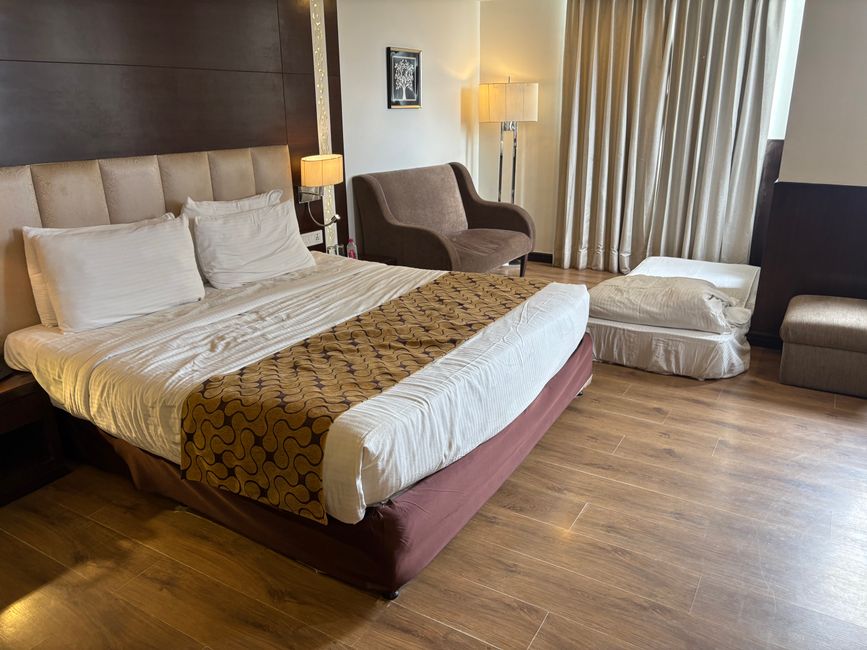
A sofa bed doesn't make a suite. It makes a regular room slightly less comfortable.
True family suites have separate sleeping areas, proper beds for kids, and enough space that you're not tripping over luggage. Most "family suites" are standard rooms with a pull-out couch and a $100 markup.
Square footage that's barely larger than standard rooms
A family suite should be at least 40–50 square metres. Anything smaller and you're just paying extra for a sofa bed in a regular room.
Ask for the exact square meterage. If the resort won't provide it, book a standard room and request a rollaway bed. You'll save money and get the same amount of space.
Lack of actual separation or privacy for parents
Real family suites have a door between the kids' sleeping area and the parents' space. Fake ones have a sofa bed in the same room where you're trying to sleep.
If there's no physical separation, you're not getting privacy. Your kids will wake you up. You'll wake them up. Everyone loses.
Red Flag #7: Deals That Require You to Sit Through a Timeshare Presentation
Heavily discounted resort stays often come with a catch: a mandatory timeshare presentation. They bury this requirement in the terms and conditions, and you don't find out until you're checking in.
These presentations are high-pressure sales environments designed to wear you down. They're not worth the discount.
How they bury the presentation requirement in fine print
The deal looks incredible. Three nights for $299. Then you read the fine print and discover you're required to attend a 90-minute presentation. In reality, these presentations run 2–3 hours and involve aggressive sales tactics.
If the deal requires any kind of attendance, meeting, or tour, walk away. The discount isn't worth the stress.
The real cost of 'free' nights when you factor in your time and stress
Let's say you save $400 on accommodation but spend three hours in a high-pressure sales pitch. That's $133 per hour, and you've just burned half a day of your holiday being sold something you don't want.
Your time on holiday is worth more than that. Pay full price and enjoy your trip.
What Actually Makes a Resort Worth Your Family's Time and Money

Good family resorts don't need gimmicks. They have practical facilities that work: shallow pools with lifeguards, rooms with actual space, flexible dining that accommodates picky eaters, and staff who understand that travelling with kids is chaotic.
Look for properties that list specific amenities rather than vague promises. Room sizes in square metres. Kids' club hours and age ranges. Included activities with no hidden fees. Honest photos that show the property as it actually is.
If you're struggling to sort through the noise, Toddler Vacay specialises in evaluating family resorts based on what actually matters to parents travelling with young children. We score properties on concrete metrics, not marketing fluff, so you can make decisions based on real data rather than polished brochures. Get in touch if you want help finding a resort that's genuinely worth your money.