Vacation Activities That Keep Toddlers Happy (Not Just Busy)
You've planned the perfect family holiday. You've researched toddler-friendly attractions, booked accommodation with a pool, and mapped out a week of activities. Then you arrive, and your 18-month-old would rather open and close the hotel room door 47 times than visit the aquarium you drove an hour to reach.
This isn't failure. It's reality.
The gap between what genuinely engages toddlers and what we think should engage them is vast. Most holiday planning assumes toddlers are just smaller versions of older children. They're not. Their attention spans, sensory thresholds, and capacity for novelty work completely differently. A successful toddler holiday doesn't look like a scaled-down version of a school-age family trip. It looks like something else entirely.
The frustration isn't about your planning. It's about the mismatch between adult vacation expectations and what actually holds a toddler's attention for more than eight minutes.
Why Most 'Family-Friendly' Activities Miss the Mark for Toddlers
When venues advertise themselves as family-friendly, they usually mean suitable for children aged five and up. A museum with interactive exhibits designed for school-aged children isn't interactive for a two-year-old who can't read instructions or follow multi-step activities.
The typical adult vacation itinerary revolves around seeing things: landmarks, attractions, tours, experiences. Toddlers don't care about seeing things. They care about doing things, repeatedly, with their hands. The attention span for passive observation is roughly 90 seconds. The attention span for pouring water from one cup to another? Potentially 20 minutes.
Quality engagement for toddlers means simple, sensory, and repeatable. It means activities where they control the pace and the outcome. It means doing the same thing five times in a row because repetition is how they learn and process. This doesn't align with ticking off attractions or maximizing your holiday investment.
You're not doing it wrong. The challenge is real. Planning for this age group means accepting that your itinerary will look nothing like the travel guides suggest.
1. Beach Time (But Make It Actually Toddler-Sized)
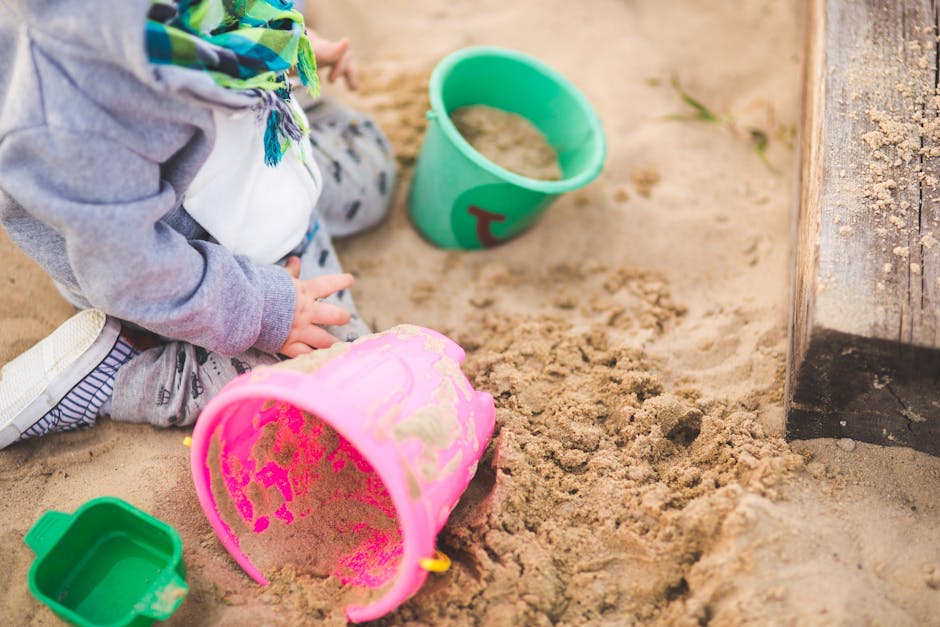
The beach sounds perfect for toddlers. Open space, natural materials, water play. In practice, many toddlers find beaches overwhelming rather than delightful. Not all of them, but enough that you shouldn't assume yours will love it.
Why the whole beach overwhelms them
Beaches are sensory chaos for small children. The space is vast and unbounded. The waves are loud and unpredictable. The sand is hot. There are crowds, dogs, and no clear edges to define where they should stay. For a toddler who's still learning to navigate their immediate environment, this is too much input at once. They cling to you instead of playing because they're trying to process everything simultaneously.
The 'bucket zone' approach that works
Create a small, defined play area within arm's reach. Bring three buckets, a small shovel, and access to water. Set up on a tarp or mat that visually marks their space. This contained zone gives them boundaries and focus. They can pour, fill, dump, and repeat without the sensory overload of the entire beach competing for their attention.
Plan for 20 to 30 minutes, not three hours. Leave before the meltdown arrives. You'll get better engagement from three short beach sessions across a week than one marathon day that ends in tears.
2. Hotel Room Treasure Hunts
Hotel rooms are fascinating to toddlers. New light switches. Drawers that open differently. A bathroom with unfamiliar fixtures. Curtains that pull across in a satisfying way. This isn't them being difficult. This is genuine exploration.
Turn it into an activity. Hide their familiar toys around the room and let them find them. Ask them to collect all the pillows. Give them the job of finding every soap bottle in the bathroom. These aren't elaborate games, but they provide focused engagement during transition times when you need to unpack, decompress, or get ready for dinner.
The benefit is mutual. They're entertained. You get 15 minutes to sort out the logistics of being in a new space. Everyone wins.
3. Watching Local Rubbish Trucks and Street Sweepers
Your toddler will be more captivated by the rubbish truck outside the hotel than by the wildlife park you paid $85 to visit. This isn't a problem to solve. It's information about what genuinely holds their attention.
Ask hotel staff about rubbish collection schedules. Find a spot where you can watch street activity safely. Let them watch the trucks, the sweepers, the delivery vans. The appeal is movement, noise, repetition, and real-world cause-and-effect. A truck arrives, picks up bins, compacts rubbish, and drives away. This is endlessly fascinating to a two-year-old.
This isn't a low-value activity. It's understanding what captivates this age group and working with it rather than against it. At Toddler Vacay, we help families plan itineraries that align with how toddlers actually engage with the world, not how we think they should.
4. Playground Hopping (Not Sightseeing)

Reframe vacation success. Instead of three landmarks, visit three playgrounds. Playgrounds offer toddlers physical engagement, social observation, and the perfect balance of familiar and new. The equipment works the same way as home, but it looks different and sits in a different context.
Use playground stops as the structure for your daily outings. Plan your route around them rather than around museums or galleries. This gives your toddler something to look forward to and a clear purpose for the outing that makes sense to them.
Practical benefits: playgrounds are free, usually have toilets nearby, and tire toddlers out effectively. You'll get better naps and easier bedtimes, which improves everyone's holiday experience.
5. Feeding Ducks, Fish, or Any Willing Animal

Feeding animals combines repetition, cause-and-effect, and gentle excitement. Throw food, watch the animal respond, repeat. This holds toddler attention because they control the interaction and can predict the outcome.
Bring appropriate food and check local rules. Visit the same spot multiple times during your holiday. The repetition matters more than the variety. A hotel koi pond works as well as a famous duck pond. The activity itself is what engages them, not the prestige of the location.
Supervise closely and wash hands afterward. That's the safety reminder. You already know this.
6. Riding Escalators and Lifts Repeatedly
Your toddler will choose riding a lift ten times over visiting the museum the lift leads to. The lift is the attraction. Controlled movement, buttons to push, predictable patterns, sensory input. This is quality engagement because they're fully absorbed and genuinely delighted.
Build this into shopping centre or hotel visits rather than fighting it. If you need to go to a shopping centre anyway, factor in 15 minutes for lift rides. It's not wasted time. It's an activity that meets their developmental needs perfectly.
7. Splashing in Hotel Baths (Not Pools)
Hotel baths often win over resort pools. The space is contained. The temperature is controlled. There are no crowds. The activity is familiar but feels special because it's in a different bathroom.
Bath time becomes an extended play session on holiday. Bring small toys or cups for pouring. Let it run longer than it would at home. This works as an evening wind-down activity that doubles as hygiene and entertainment.
Some toddlers love pools. Many prefer the bath. Don't force the pool if the bath is working.
8. Collecting Rocks, Shells, or Literally Anything

Collecting transforms walks into engaging adventures. The object matters less than the process: finding, choosing, carrying, sorting. A walk to collect interesting rocks is more engaging than a walk to see a viewpoint.
Bring a small bag or bucket specifically for collections. Make it part of each outing. This slows the pace down to toddler speed, which makes short walks feel substantial rather than rushed. You'll cover less distance but get more engagement.
9. Early Morning Breakfast Buffet Exploration
Breakfast buffets offer toddlers choice, novelty, and the thrill of getting their own food. This is a legitimate activity, not just a meal. The choosing and carrying is the engagement.
Go early when it's quieter and staff are more tolerant of slow, exploratory selection. Let your toddler make multiple trips for small amounts rather than loading one plate. The process matters more than the efficiency.
This can easily occupy 45 minutes, which is a significant chunk of morning routine handled in a way that keeps them engaged.
10. Watching Planes, Trains, or Boats (From a Distance)
Toddlers often prefer watching transport from a safe distance over riding it. Find viewing spots: airport observation areas, train station platforms, harbour edges. Let them watch.
This works because of repetition (multiple vehicles), anticipation (waiting for the next one), and no pressure to participate. They can observe at their own pace without the stress of boarding, sitting still, or managing the sensory input of actually being on the transport.
This can fill 30 to 45 minutes easily with minimal effort from you.
The Real Itinerary: Following Their Lead
Vacation success with toddlers means quality engagement moments, not ticked-off attractions. Following their lead means slower pace, more repetition, and simpler activities. This isn't a compromise. It's age-appropriate travel.
Plan one toddler-focused activity per day and remain flexible for the rest. If the lift becomes the highlight, let it be the highlight. If they want to visit the same playground three days in a row, that's fine. Repetition is how they process and enjoy experiences.
Holidays with toddlers look different. They're not stress-free. The challenge is real. But working with their developmental stage rather than against it makes the experience better for everyone. If you need help planning a toddler holiday that actually works, Toddler Vacay specializes in creating realistic itineraries that align with how young children actually engage with travel.
The goal isn't to do more. It's to do less, better, and let them lead the way.